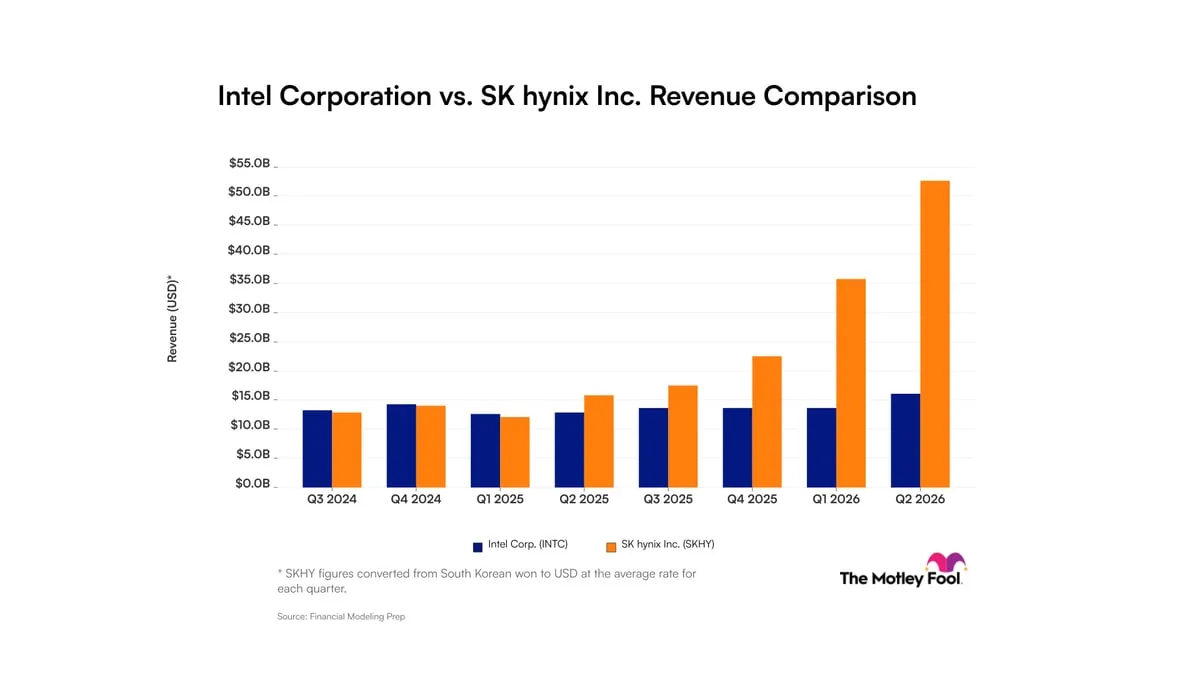
Az SK Hynix bevétele az elmúlt időszakban meredeken emelkedett, miközben az Intel teljesítménye nagyrészt stagnált. Míg 2024-ben a dél-koreai memóriagyártó bevétele még elmaradt az Intel mögött, a fejlett memóriachipek iránti óriási keresletnek köszönhetően mára jelentősen átvette a vezetést a piacon.
A kereslet növekedése komoly árazási erőt biztosít az SK Hynix számára, amely 2026 második negyedévében 76 százalékos működési margót ért el az egy évvel korábbi 41 százalék után. Ezzel párhuzamosan az Intel egy átfogó szerkezetátalakítás közepén tart, és Lip-Bu Tan vezérigazgató irányítása alatt próbálja visszaszerezni a növekedési pályát.
Az SK Hynix az Egyesült Államokban, Indianában indított új félvezető-csomagoló üzem építését a kapacitás bővítésére. A piaci elemzők szerint a fő kérdés most az, hogy a chipek iránti rendkívüli kereslet meddig marad fenn, és a gyártási kapacitások bővülése miként befolyásolja majd a hosszú távú árakat és a profittartalmat.
Az eredeti szöveg (The Motley Fool)
Intel (INTC +1.72%) primarily generates its revenue by designing, developing, and manufacturing various computing processors, discrete graphics units, edge computing solutions, and connectivity components tailored specifically for global original equipment manufacturers, cloud service providers, and other enterprise network builders.
During the late summer months, it priced an upsized $20 billion public offering of common stock. In October, it entered a technical collaboration with Applied Materials to develop next-generation transistor packaging technologies.
SK Hynix (SKHY +4.05%) primarily generates its revenue by designing, manufacturing, and selling a wide variety of advanced memory semiconductors, including specialized dynamic random-access memory (RAM) and flash products with various performance characteristics customized to meet complex customer computing requirements.
It recently signed a preliminary memorandum to receive federal government grants. In August, the company officially broke ground on an advanced semiconductor packaging facility in Indiana, while its publicly traded shares experienced a notable price decline during the middle of October.
Revenue represents the total gross sum of money a business successfully brings in from its primary commercial operations before any associated operating expenses, employee salaries, material costs, debt interest payments, or taxes are deducted to determine final profitability. This metric helps investors measure a company's overall size, market footprint, and long-term trajectory.
Intel vs. SK Hynix Revenue over the last 8 quarters. Figures: SK Hynix shown in U.S. dollars, converted from South Korean won.
Data source: Financial Modeling Prep. SK Hynix's figures are converted from South Korean won to U.S. dollars. Data as of Oct. 22, 2026.
A look at Intel and SK Hynix's sales over the past two years is eye-opening. In 2024, the Korean memory giant's revenue was less than Intel's. Not only did SK Hynix grow past the semiconductor titan in 2025, it has blown Intel's sales out of the water in 2026.
This demonstrates the massive demand for the advanced memory components sold by SK Hynix, giving the company pricing power and enabling it to achieve historic profitability thresholds across all major margin metrics during the second quarter of 2026. For example, it hit a 76% operating margin in Q2, up substantially from 41% in the prior year. The big unknown is how long the demand will last and whether SK Hynix's expansion of its manufacturing facilities will lead to lower margins as prices stabilize.
Intel is in the midst of a turnaround. Amid the artificial intelligence boom, the semiconductor veteran should be seeing strong sales growth. Yet it struggled to do so, and in Q4 of 2025, its revenue declined year over year.
The situation appears to be reversing in 2026. CEO Lip-Bu Tan took over in 2025, and he implemented changes that helped Intel achieve its highest quarterly sales total in the last two years in Q2 of this year. From here, the expectation is that Intel's revenue will continue to climb under Tan's leadership, which investors should keep an eye on to confirm that happens.
*Average returns of all recommendations since inception. Cost basis and return based on previous market day close.
Invest better with The Motley Fool. Get stock recommendations, portfolio guidance, and more from The Motley Fool's premium services.