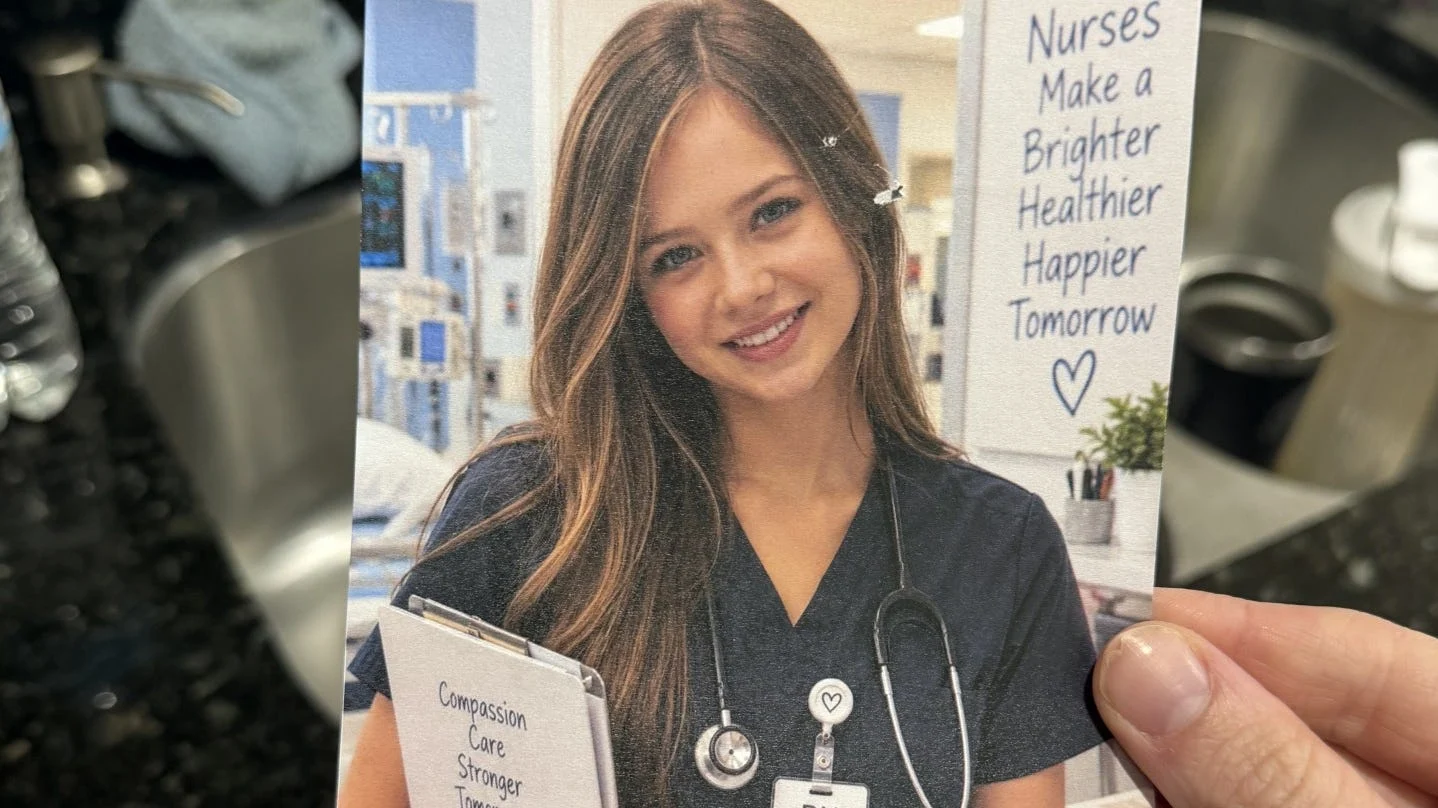
Egy amerikai édesanya közzétette, hogy 6 éves lánya egy AI által generált képpel tért haza az iskolából, amely azt ábrázolta, hogyan nézne ki 25 évesen ápolónőként. A szülő szerint a számítógépes kép felülírta a gyermek saját rajzát és elképzelését, emellett komoly adatvédelmi és hozzájárulási aggályokat is felvetett, mivel a szülők nem adtak engedélyt a gyermekek fotóinak AI-modellbe töltésére.
Szakértők arra figyelmeztetnek, hogy a pedagógusoknak tilos lenne személyes adatokat és fotókat feltölteniük külső AI-rendszerekbe. Bár sok oktatási intézmény igyekszik felkészíteni a diákokat a mesterséges intelligencia használatára, a pontos szabályozás és az etikai útmutatók hiánya miatt a tanárok gyakran tisztázatlan keretek között kísérleteznek.
Az érintett iskolakerület a panasz után leállította a hasonló feladatokat. A jövőben átfogó képzést indítanak a pedagógusoknak, amely kifejezetten a diákok adatvédelmére és a felelős eszközhasználatra fókuszál.
Az eredeti szöveg (USA Today)
When Nikki Anderson, 32, opened up her 6-year-old's Friday folder on Oct. 16, she was excited to see what her daughter, Harper, had been working on at school that week.
The folder contained spelling tests and artwork from Harper's first grade classroom. But among the construction paper and lined sheets where her daughter wrote what she wanted to be when she grows up − a nurse − was a peculiar photo that stopped Anderson in her tracks.
The image, generated by artificial intelligence, showed what her daughter would look like as a 25-year-old. The image was of a young woman with a "baby face," Anderson said, with sleek, wavy hair, wearing a nurse's uniform and holding a clipboard. Anderson's daughter proudly told her mother how her specials teacher had made the photo with AI. She especially loved the wavy hair she'd have when she's a grownup, Harper said.
Another image of her daughter as a nurse − the one her daughter dreamed up with her own imagination and crafted with her own two hands out of construction paper and penciled-in eyes, nose and mouth − didn't feature wavy hair.
"My child's interpretation of the world has been replaced with an algorithm's interpretation of what a successful adult woman should look like," Anderson, of Charleston, South Carolina, wrote in an Instagram post about the AI image, which has more than 600,000 likes. "She had already imagined the future. Made something incredible to represent it. What part of that needed to be finished by a computer?"
AI is infiltrating everyday life, and the classroom is no exception. Many teachers are adapting to AI use, urged by some education leaders to not get left behind. Even in places prohibiting AI use in some classrooms – like New York City, where Mayor Zohran Mamdani mandated it as such for preschool through eighth grade students in September – teachers are pushing back by saying students need to learn how to use AI in safe and smart ways. But is AI use in schools getting in the way of children's creativity? And shouldn't parents have to give permission before images of their kids are uploaded onto AI platforms? These are the questions Anderson and thousands of other parents are asking in the wake of the AI boom.
There's a lack of legislation and guidance around AI use in schools and what teachers should or shouldn't put into AI models, said Tina Mulqueen, a professor at Washington State University Vancouver and senior vice president of digital transformation at Burson, a communications company.
"I don't want to put that on the teacher," she said. "I just have so much respect for teachers. It's a really difficult job and I think that most of them are really well-intentioned in how they're trying to navigate this with AI."
Teachers shouldn't be inserting personally identifiable information about students into AI models, Mulqueen said. But if AI is going to be useful and expected in the workforce, she said, "then we probably want to teach our kids to be able to interface."
"But we don't want to take learning away from them," she said.
Conversations around AI in classrooms are typically centered around AI literacy and how to use AI to improve learning, said Jason Yeh, cofounder of Patron, an early stage venture firm investing in the next generation of consumer technology. One of his investments is in a company that specializes in personalized education through AI. But Anderson's situation doesn't sound related to either of those purposes, he said. Because parents are growing increasingly wary of AI, Yeh said more and more schools are becoming cautious about using it at all.
"Schools need to figure out the best way to incorporate relevant technology to help people learn better," Yeh said.
Anderson told USA TODAY she signed a consent form at the start of the school year that allowed the school to use Harper's photos and artwork in the media; it didn't say anything about AI.
"Charleston County School District recognizes both the opportunities and responsib