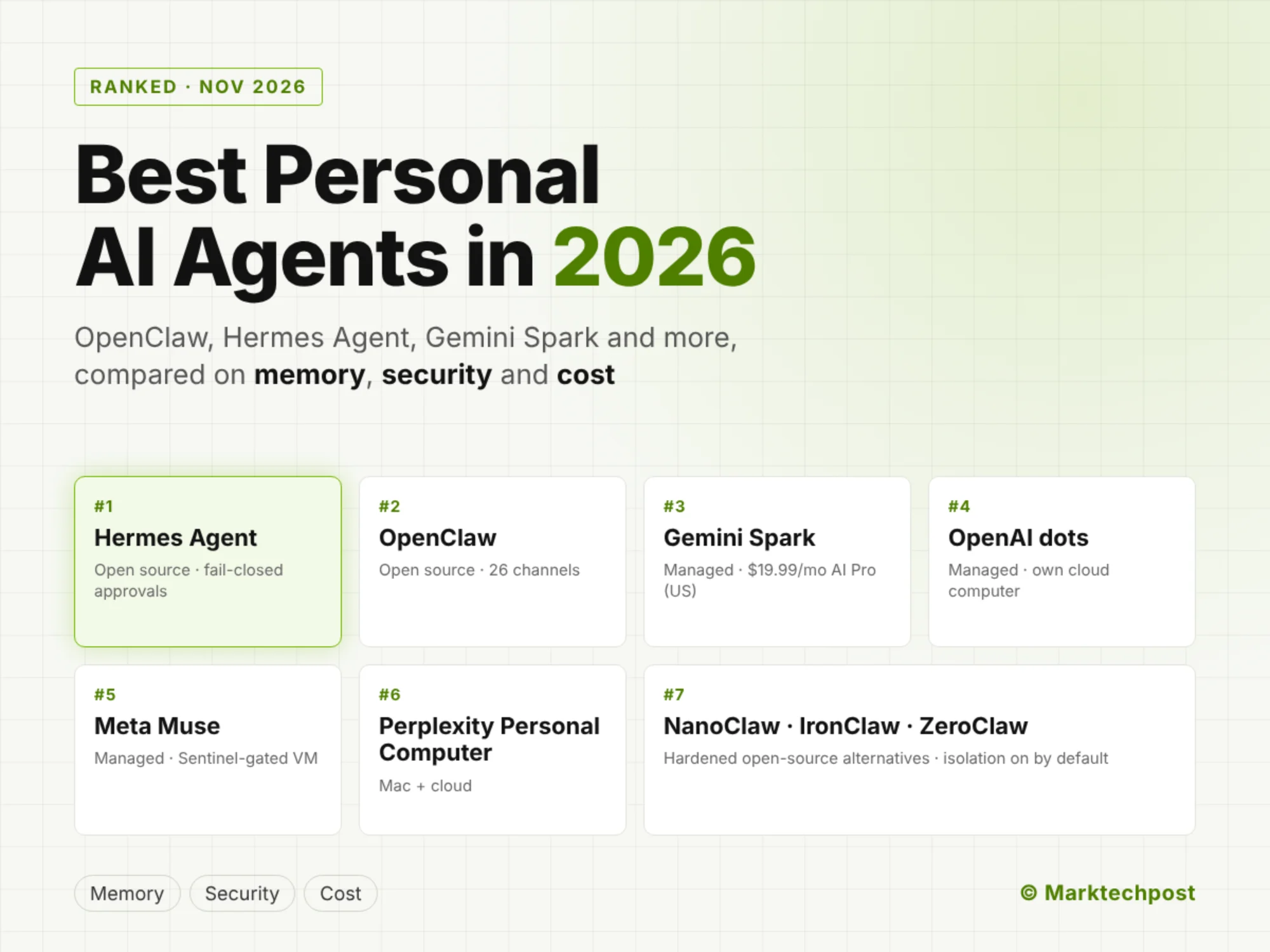
A személyi AI-ügynökök (personal AI agents) kategóriája rohamosan bővült: a folyamatosan futó, munkamenetek között emlékező rendszerek piaca mára két nagy táborra oszlott. A saját szerveren vagy gépen futtatható nyílt forráskódú megoldások (mint a Hermes Agent vagy az OpenClaw) teljes rugalmasságot biztosítanak, míg a felhős, kezelt ügynökök (mint a Gemini Spark, az OpenAI dots vagy a Meta Muse) előfizetéses modellben kínálnak kényelmes infrastruktúrát.
A tesztek alapján a fejlesztők számára a Hermes Agent nyújtja a legalaposabb memóriakezelést és a legbiztonságosabb alapbeállításokat, míg az átlagos felhasználóknak a Google Workspace-be integrált Gemini Spark és az ingyenesen kipróbálható Meta Muse jelenti a legegyszerűbb belépési pontot. A nyílt forráskódú opcióknál ugyanakkor kiemelten fontos a védett konténerek (sandbox) használata a biztonsági kockázatok elkerülésére.
A költségek tekintetében a saját gépes rendszereknél a szoftver ingyenes, ám a modellhasználatért (tokenekért) fizetni kell, amennyiben nem helyi modellt futtat az olvasó. A felhős platformok fix havi díjat kérnek, ami tartalmazza az ügynök futtatásának és a modellek hívásának díját is.
Az eredeti szöveg (MarkTechPost)
A personal AI agent runs continuously, keeps memory across sessions, and acts inside your apps. You talk to it in a chat app, by email or by voice. It keeps working after you close the window.
The category started small. OpenClaw began in November 2025 as Clawdbot, a weekend project by Peter Steinberger. Twelve months later, Google, OpenAI, Meta and Perplexity all ship their own versions.
The products split into 2 camps. Self-hosted agents run on your machine or server and use any model you choose. Managed agents run on a vendor’s cloud VM and come bundled with a subscription.
How we ranked them
We scored each agent on 3 axes that matter once an agent holds your inbox and credentials.
Memory: what persists, where it is stored, and whether you can read, edit or delete it.
Security: default permissions, the isolation boundary, approval gates, and the public incident record.
Cost: the subscription price, or token spend plus hosting for self-hosted options.
Facts come from vendor documentation, launch posts and independent security research. Prices are US list prices as of November 21, 2026. Ranking reflects overall fit for an individual user, not raw capability.
Comparison table
Rank Agent Maker Runs on Memory Security default Starting cost Best for 1 Hermes Agent Nous Research Your machine or server; Docker, Modal, Daytona backends MEMORY.md, USER.md, SQLite FTS5 session search, self-written skills Manual approvals, denied on timeout; hardline denylist Free (MIT) + model tokens Developers who want an agent that learns 2 OpenClaw OpenClaw Foundation Your machine or server; opt-in sandbox Editable Markdown workspace files; SQLite sessions since 2.0 Full host access unless sandbox is enabled Free (MIT) + tokens; managed hosts ~$12–$49/mo Widest chat-channel reach 3 Gemini Spark Google Dedicated Google Cloud VMs Google account context via connected apps Asks before spending money or sending email $19.99/mo AI Pro (US) Google Workspace users 4 OpenAI dots OpenAI OpenAI cloud computer; optional connected computer Chats, ChatGPT memory and the dot’s own notes Proactive research is read-only; passwords hidden from model Included in eligible ChatGPT Pro and Business Premium plans ChatGPT and Codex power users 5 Meta Muse Meta Muse Secure VM in Meta’s cloud Learns preferences; forgets on request Sentinel agent gates internet access; approvals for email and purchases Free; $20 and $100 tiers Everyday errands on a free tier 6 Perplexity Personal Computer Perplexity Your Mac plus Perplexity cloud Not detailed publicly On-device authorization, 2FA, audit trail Pro or Max subscription Mac users who need local files 7 NanoClaw, IronClaw, ZeroClaw Open-source projects Containers, WebAssembly or a small Rust binary Varies by project Isolation on by default Free + tokens Security-first self-hosters
1. Hermes Agent (Nous Research)
What it is : Hermes Agent is an open-source agent from Nous Research.
It runs from a terminal UI, a native desktop app , a local web dashboard and messaging gateways. Parallel counts about 25 supported platforms as of October 2026 , including Telegram, Slack, WhatsApp, Signal, Teams and email. Native iMessage arrived in June 2026.
Memory : Memory is the main reason to pick Hermes. It keeps persistent MEMORY.md and USER.md files and curates them with periodic nudges. Session history sits in SQLite with FTS5 full-text search and LLM summarization. Pluggable providers include Honcho user modeling plus 8+ community backends.
Hermes also writes its own skills. It turns completed complex tasks into reusable skills and refines them over time. Skills follow the agentskills.io standard. The /learn command captures a workflow as a slash command without hand-writing SKILL.md.
Security : The docs describe a 7-layer defense-in-depth model . Layers include user allowlists, DM pairing and human approval for destructive commands. Approval mode can be manual, smart (an auxiliary LLM rates risk) or off.