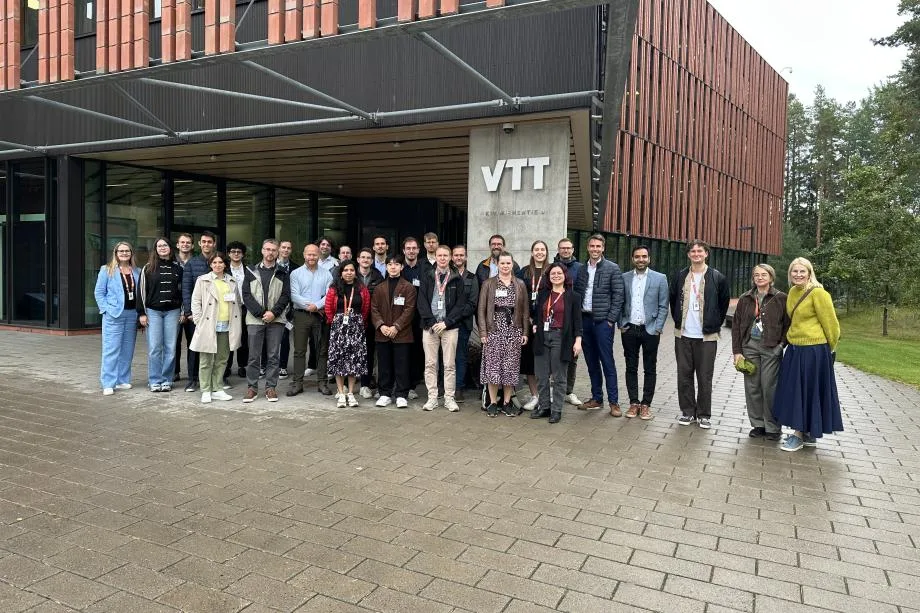
A finn VTT által koordinált, négyéves PackAhead projekt mesterséges intelligenciát, biotechnológiát és anyagtudományt ötvöz az új generációs, fenntartható csomagolóanyagok kifejlesztéséhez. A kezdeményezésben 13 európai és dél-koreai partner vesz részt, akik az MI-t és a fizikai alapú szimulációkat hívják segítségül a hagyományos, időigényes próbálgatásos módszerek kiváltására, ahogy azt a VTT projekthíre részletezi.
A projekt során a mesterséges intelligenciát enzimtervezésre és biofolyamat-optimalizálásra használják, hogy átlátszó, jó teljesítményű cellulózfóliákat állítsanak elő fapépből, mezőgazdasági hulladékból és újrahasznosított rostokból. Az eljárással nemcsak a fejlesztési ciklust rövidítik le, hanem MI-alapú válogatási technológiákat is kidolgoznak a cellulózalapú csomagolások lakossági hulladékból történő kiszűrésére.
A kifejlesztett technológiákat ipari méretben is tesztelik: a kísérletek során több száz méternyi cellulózalapú fóliát gyártanak le, hogy élelmiszeripari, újrahasznosítási és lebomlási próbáknak vessék alá őket. Az itt létrehozott digitális eszközöket a jövőben a biogazdaság más területein is alkalmazni tudják majd.
Az eredeti szöveg (www.vttresearch.com)
Europe is searching for alternatives to fossil-based plastic packaging, but many bio-based solutions still struggle with performance, cost and recyclability. The new Horizon Europe project PackAhead, coordinated by VTT, addresses these challenges by combining artificial intelligence (AI), biotechnology and advanced materials development to create a new generation of sustainable cellulose-based packaging.
Launched in September 2026, the four-year project brings together 13 partners from Europe and South Korea. The consortium will develop AI-driven digital tools to optimise renewable packaging materials based on the demanding industrial requirements for performance, affordability and circularity.
PackAhead uses artificial intelligence to accelerate innovation across the entire packaging value chain, rather than relying on traditional trial-and-error development. AI will support enzyme design and bioprocess optimisation for the development and manufacturing of high-performance, transparent cellulose-based packaging films. The goal is to shorten development cycles, reduce experimental work and improve the cost competitiveness of sustainable packaging solutions.
As project coordinator, VTT leads the development of transparent cellulose-based films and supports the development of new enzymes and AI-driven technologies. The project combines advanced simulations, machine learning and process optimisation to accelerate material and process development.
“Through PackAhead we will leverage physics-based simulations and AI to tackle large and complicated material design problems. These advances can accelerate innovation and strengthen the competitiveness of the European packaging sector,” says Mikko Mäkelä, Research Professor at VTT.
Importantly, the technologies will not only be developed but also validated at pilot scale: new enzymes will be produced under industrially relevant conditions, and hundreds of metres of cellulose-based film will be manufactured for packaging, recycling and food-performance trials. This combination of biotechnology, digitalisation and large-scale piloting helps bridge the gap between current research and future commercialisation.
“What makes PackAhead interesting is the combination of renewable materials with AI-driven digital optimisation. Bringing these capabilities together can help us learn faster, reduce experimental effort and understand more quickly which solutions have the potential to perform at industrial scale," says Katariina Kemppainen, Senior Vice President, Group R&D at Metsä Group.
The films will be produced from different cellulose feedstocks, including wood pulp, agricultural biomass and recycled fibres, helping to broaden the resource base for future sustainable packaging. The project will evaluate the recyclability, biodegradability and compostability of the developed films and create AI-assisted sorting technologies that help identify cellulose-based packaging in mixed waste streams. These solutions will support future recycling infrastructures and the implementation of new European packaging regulations.
The long-term ambition of PackAhead is not only to bring sustainable cellulose-based packaging closer to commercial deployment, but also to demonstrate how AI can accelerate innovation across the broader bioeconomy. The digital tools developed in the project are expected to have applications far beyond packaging, supporting future developments in other bio-based industries.
Funded by the European Union. Views and opinions expressed are however those of the author(s) only and do not necessarily reflect those of the European Union or the European Research Executive Agency. Neither the European Union nor the granting authority can be held responsible for them.