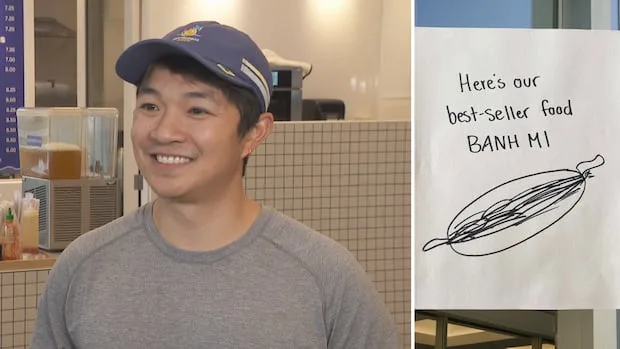
Egyre több vancouveri kisvállalkozás, köztük a NaMì kávézó és a No Frills szupermarket választja a tollal és filccel rajzolt hirdetéseket a számítógépes képek helyett. A kávézó tulajdonosa szerint a tökéletesre generált vagy hibás AI-ételképek hiteltelenek, a kézi rajzok viszont emlékeztetik a vásárlókat az emberi munkára.
Jarrett Vaughan, az University of British Columbia marketingprofesszora szerint amikor bárki másodpercek alatt előállíthat hibátlan tartalmat, a tökéletlen és emberi megoldások kezdenek kitűnni a tömegből. A kisvállalkozásoknak nem a költségvetésükkel kell felvenniük a versenyt a nagy cégekkel, hanem a személyes és emberi kapcsolatok kiépítésével.
Meghan D'Mello, a Kanadai Grafikai Tervezők Szövetségének elnöke kiemelte, hogy az AI-eszközök leértékelik a grafikusok szakmai tudását. Bár a mesterséges intelligencia hatékonyabbá teheti a munkafolyamatokat, az emberi kreativitást és a részletekre való odafigyelést nem tudja pótolni.
Az eredeti szöveg (CBC)
They may look like they were drawn hastily by someone in a brainstorming meeting, but recent advertisements from the Vietnamese café NaMì in downtown Vancouver caused a stir online.
The ads feature extremely basic renditions of the café's banh mi sandwich and a frozen coffee drink, drawn with a black marker, along with two sheets of paper with text.
"We will NOT use AI to promote our business ... we're going old school and using a Sharpie and paper!" read the sheets of paper.
NaMì's frozen coffee advertisement is drawn in the same style as that of the banh mi sandwich. The Facebook post accompanying the ads have garnered thousands of views. (NaMì/Facebook)
As restaurants around the world turn to artificial intelligence (AI) images to save costs amid razor-thin margins, NaMì owner Kevin Thach said the pen-and-paper advertising is a way of differentiating his business.
"As we get into kind of more of an era where like you see less and less people interact with people, you kind of want to remind yourself that you're not just buying food," Thach said of his pen-and-paper strategy.
"Someone had to make that food behind ... the counter. And, you know, there's effort that gets put into it as well," he added.
AI food pics on menus leave some customers with a bad taste
The rise of AI-generated restaurant images in particular have prompted blowback online, with businesses accused of peddling "AI slop."
Thach said he thought it was bizarre that restaurants would depict their own food with perfectly-manicured or erroneous AI images.
"How can you let that be displayed as your own food? ... I never find it all too appealing or appetizing," he said.
A marketing professor says customers are gravitating towards authenticity, especially from local businesses that they want to know and connect with.
"When everybody can create a perfect piece of content, when imperfection is effectively non-existent, something that is imperfect or human starts to stand out from the crowd," said Jarrett Vaughan, an adjunct professor at the University of British Columbia's business school.
AI 'slop' is dominating menus, as some restaurant owners turn to it to save time and money
Vaughan said small businesses don't need to outspend big companies in order to advertise effectively — but rather, they need to "out-humanize" them and create relationships with customers.
He acknowledged, however, that not everyone may be taken in by the AI pushback or the pen-and-paper ads.
The professor said creating a large volume of content efficiently can be difficult for small businesses, especially if resources are limited.
What do you think of restaurants using AI 'slop'?
"Obviously, we need to understand our goals and objectives and who is our target segment. We don't just create AI slop," he said.
"We do want to make sure it's authentic to the brand, but it does give an opportunity to create more content."
It isn't just restaurants that are turning to pen-and-paper advertising — a No Frills supermarket in Burnaby also saw its employees advertising weekly deals using Sharpie-drawn sheets of paper.
A No Frills supermarket in Burnaby, B.C., also turned to pen-and-paper ads to draw attention to its weekly deals last month. (No Frills (Justin’s, Burnaby Heights)/Facebook)
Meghan D'Mello, the president of the Association of Registered Graphic Designers, said advertising is traditionally the bulk of work being done by professional graphics designers.
She said job descriptions for graphic designers were increasingly not focusing on design, but rather "prompting" to use for AI image-generating services, and some of the profession's skills were being devalued.
"There's a lot of anything that designers can do people claim can be generated by AI — which is unfortunate, because AI can never replace ... the attention to detail that professional designers have been trained to work with," she said.
Graphic design students say they're waiting out wave of AI advertisin